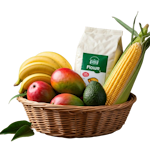
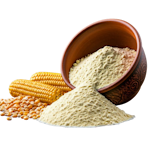
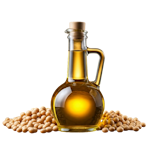
Nigeria’s soybean sector has grown rapidly in recent years, driven by supportive policies (e.g. the Central Bank’s Anchor Borrowers Program) and private investment. Domestic soybean production now exceeds 1 million tonnes per year, and processing capacity is expanding. USDA forecasts indicate soybean crush rising from about 900,000 MT in 2021/22 to roughly 1,150,000 MT by 2024/25. That volume of crushing would yield on the order of 0.52–0.53 MT of oil per MT of soybeans (since soybeans are ~20% oil), or roughly 600,000 MT of crude soybean oil annually once the larger crushers come online. (For context, Nigerian crushers currently have about 875,000 MT capacity, and FAS Lagos projects 1.15 MMT by 2024/25.) Importantly, Nigerian soybeans are non-genetically-modified (non-GMO) by national policy, giving the crude oil a niche appeal in markets requiring identity-preserved oil. Major local processors (e.g. SALMA Oil Mills, Grand Cereals, Karma Foods, ECWA Feeds, etc.) are extracting both oil and protein meal, aided by agricultural research and donor support (IITA, USAID, USSEC, etc.), which improve yields and quality. All these factors – rising output and crush, favorable farm economics, and an established supply chain – mean Nigeria can sustainably offer growing volumes of crude soybean oil for export.
Nigerian crude soybean oil has essentially the same composition as soybean oil worldwide and meets international edible-oil standards. It is a clear, light-amber liquid rich in unsaturated fats, virtually free of trans fats, with a mildly “vegetal” odor. Its fatty-acid profile is typically about 50–55% linoleic (C18:2), 20–25% oleic (C18:1), with the remainder mostly saturated (≈10–11% palmitic C16:0 and 3–4% stearic C18:0). In other words, roughly 10–15% of the oil is saturated fat (mostly palmitic and stearic), and the rest is beneficial poly- and monounsaturated fat. This high polyunsaturated content (plus natural antioxidants like vitamin E and phytosterols) makes soybean oil a clear liquid at room temperature with a favorable nutrition profile. Typical crude soybean oil qualities in Nigeria (and generally) include: - Iodine Value: ~120–143 (g I₂/100 g oil), reflecting unsaturation.
- Acid Value: Fresh crude oil may have FFA 1–1.5% (acid value ~2–3 mg KOH/g), but refined edible oil specs require ≤0.6 mg KOH/g. (Nigerian standards permit up to 4.0 mg KOH/g for “virgin” oil and 0.6 for refined.)
- Peroxide Value: Normally kept <10 meq O₂/kg (indicating freshness); refined oil specs set ≤10 for refined and ≤15 for virgin.
- Saponification Value: ~189–195 mg KOH/g.
- Refractive Index (40 °C): ~1.466–1.470.
- Density (20 °C): ~0.919–0.925 g/mL.
- Moisture: very low (<0.2%).
- Insoluble Impurities: <0.05%.
- Color: Crude oil can measure roughly 30–45 on the Lovibond® scale (red+yellow), darker than refined oil – this is normal for unbleached oil and removable by standard bleaching.
Overall, Nigerian crude soybean oil meets or exceeds standard edible-oil parameters. The values above match international standards (e.g. East African/Codex norms) for soybean oil. In particular, the iodine and saponification values and fatty-acid profile of Nigerian soy oil are identical to those from other origins (e.g. U.S. oil has ~50% linoleic, 22% oleic, 10.5% palmitic, 4.4% stearic). Any slight differences (e.g. a bit higher FFA in freshly pressed oil) can be handled by normal refining. In sum, Nigerian crude soy oil is a high-quality oil in line with global specifications for edible soybean oil.
Crude soybean oil – after conventional degumming, neutralizing and bleaching – becomes a versatile edible oil and industrial feedstock. Its low saturated fat and zero cholesterol content make it especially attractive in foods. Key uses include:
Food Processing
Refined soybean oil is a neutral-tasting, high-smoke-point vegetable oil ideal for cooking and frying. It is widely used in margarine, shortenings and baked goods. Its balanced fatty acids (PUFA+MUFA) promote a “heart-healthy” image; health authorities note that replacing saturated fat with polyunsaturated oils like soy oil significantly lowers LDL cholesterol and cardiovascular risk. Many food manufacturers blend soy oil into salad dressings, sauces, noodles, snack foods and prepared foods because of its mild flavor and stable frying performance.
Cosmetics and Personal Care
Soybean oil is a valued emollient in skin and hair products. It penetrates skin readily and provides deep moisturization without greasiness. Its natural vitamin E (tocopherols) act as antioxidants, protecting the skin from free-radical damage and UV effects (thus an “anti-aging” benefit). For example, cosmetic databases note: “Glycine soja (soy) oil is a great emollient and moisturizer… rich in linoleic and oleic acids and antioxidants (vitamin E), providing protective benefits against environmental stressors”. Soy oil is thus added to lotions, creams, sunscreens, anti-wrinkle serums, shampoos and hair conditioners for hydration, improved texture and skin-conditioning effects.
Pharmaceuticals & Nutraceuticals
Highly refined soybean oil is a common excipient in pharmaceuticals. It is the basis of intravenous fat emulsions for parenteral nutrition (e.g. products like Nutrilipid® 20% soy oil emulsion) because it provides a calorie-dense source of essential fatty acids. It is also used as the liquid fill in soft-gel capsules and oil-tablets (soybean oil serves as a carrier ensuring uniform distribution of active ingredients). In such uses the oil is degummed and refined to pharmaceutical standards, but the fundamental composition (neutral triglycerides with high PUFA content) is ideal for safe human nutrition and drug delivery.
Animal Feed
Crude soybean oil (or even minimally refined) can be added to livestock and aquaculture feeds as a high-energy supplement. Adding just a few percent soy oil to poultry, swine or fish diets increases caloric density and palatability, accelerating weight gain. Indeed, industry sources note soy oil provides essential fatty acids and energy in animal feeds. (Moreover, the remaining soybean meal after oil extraction is a high-protein animal feed, making soybean processing doubly valuable.) Nigerian soybean oil can be marketed to feed millers and fish/poultry farms either as crude oil or as a mild-refined feed oil.
Biofuels and Industrial
Globally, soybean oil is a major biodiesel feedstock. For example, U.S. biodiesel producers consume roughly 30% of U.S. soybean oil production, and vegetable oils (led by soy) provide the bulk of feedstock for US biodiesel. Crude soy oil can be transesterified into FAME biodiesel or hydrogenated to renewable diesel, cutting greenhouse emissions relative to fossil diesel. Soy oil is also used industrially in paints, varnishes, inks, lubricants (as a renewable base oil), and in oleochemicals (surfactants, soaps, resins). Nigerian crude soy oil – either directly or after degumming – can serve these markets worldwide as a sustainable petroleum substitute.
In summary, crude Nigerian soybean oil has broad applications. It can be refined to edible oil for food industries, and its composition (neutral fats, vitamin E) gives health and processing advantages. It serves as a cosmetic emollient and active carrier (thanks to linoleic/oleic acids and antioxidants). It is already used in medical feeds (IV nutrition) and capsules. And as an energy-dense oil it is a key ingredient for animal feeds and biodiesel. All told, the oil’s profile (high PUFA, vitamin E, non-GMO) matches or exceeds the requirements of each of these industries.
Exporters of crude Nigerian soy oil must meet the quality and safety regulations of the destination markets. For food-grade use, this means compliance with international standards (Codex, EU, national) on pesticides, heavy metals (lead, arsenic, etc.), aflatoxins, and additives. Nigeria’s own food law explicitly forbids edible oils from containing contaminants such as heavy metals, petroleum residues or foreign particles, and requires oils to be free of rancid odour or taste. In practice, crude oil for edible export is degummed and neutralized to remove gums and free fatty acids, then bleached (if needed) – procedures well within standard refining protocols. Certificates of Analysis (COAs) documenting FFA, moisture, peroxide value, and residue levels are routinely provided to importers. The good news is that soybean oil’s natural composition (very low saturated fat, zero cholesterol, high unsaturates) is regarded as healthy. Health authorities globally confirm that replacing saturated fats with polyunsaturated oils like soy oil reduces LDL cholesterol and cardiovascular disease risk.
Another regulatory advantage is Nigeria’s non-GMO status for soy. Some markets (notably the EU, Japan, and certain premium segments) have strict GMO labelling laws. For example, EU law mandates clear labelling of foods that contain or are produced from GMOs. Nigerian soy oil, being from identity-preserved non-GMO beans, can often sidestep these requirements or command a premium as a “non-GMO” oil. In short, as long as standard edible-oil quality parameters are met (via normal degumming/refining), Nigerian crude soy oil is acceptable and even desirable in global markets.
Nigeria’s soybean oil export competitiveness rests on several unique factors:
Non-GMO Identity: Nigeria’s soybean crop is strictly non-GM by law. This yields crude oil that appeals to markets demanding GMO-free products (e.g. many EU buyers, health-food brands). It’s a unique selling point: buyers can market it as “sustainably grown non-GMO oil from Africa.”
Expanding Supply: Thanks to farm support programs and new investments, Nigeria’s soybean acreage and yields have risen sharply. Production currently outstrips domestic crush demand, and new crushing plants are being built. For example, analysts note Nigerian production now comfortably exceeds 99 million bushels (about 2.7 MMT) and crush capacity is around 875,000 MT (with firms planning expansions). As a result, Nigerian soy oil availability is on an upward trend, ensuring stable export volumes.
Cost Competitiveness: The recent depreciation of the naira has made Nigerian exports cheaper in foreign-currency terms. In fact, agricultural export earnings jumped ~48% in 2023 largely due to naira devaluation. Lower local labor and land costs also mean Nigeria can offer bulk soybean oil at attractive prices versus many traditional suppliers.
Regional Trade Agreements: Nigeria’s membership in ECOWAS and the African Continental Free Trade Area (AfCFTA) gives it duty-free or low-tariff access to neighboring markets in West and Central Africa. Crude oils generally face minimal tariffs within ECOWAS. Nigeria also has duty-free export rights to the U.S. under AGOA for many agricultural goods (though crude oil falls under specific rules). Proximity to European ports across the Atlantic is a logistical plus. In sum, Nigeria enjoys favorable trade terms to many African and international markets.
Quality and Sustainability Credentials: Nigerian soy farmers tend to use relatively low agrochemical inputs, and leading processors are pursuing international certifications (ISO, HACCP, etc.) to reassure buyers. Buyers can differentiate Nigerian soy oil as an eco-friendly product. Indeed, industry analysis suggests “sustainably produced Nigerian soy oil” can capture health- or environment-focused premiums. All these factors – increasing yield, policy support, and the non-GMO niche – give Nigerian crude soybean oil a firm competitive edge in the export market.
Worldwide demand for crude soybean oil is large and diverse. Major importing countries for crude soybean oil (or blended soy oil) include India, the European Union, China, and others. For example, India is the world’s largest buyer of edible oils; its 2023 crude soy oil imports were on the order of 3–4 million tonnes (with duty cuts recently to ease supply shortages). Nigeria could supply India’s food and biofuel sectors with high-quality non-GMO oil. Other significant markets include:
European Union (e.g. Poland, Netherlands, Germany, UK, Italy, Spain)
EU countries import oilseeds and crude oils for cooking, margarine, and biodiesel. Nigerian oil (meeting EU quality and sustainability standards) could enter EU refineries (notably in the Netherlands, a major re-export hub) and serve niche segments (non-GMO, organic). Duty-free access within ECOWAS and potential corridor to EU ports make Europe a reachable market.
China
A huge consumer of vegetable oils (mostly palm and rapeseed), China also imports soy oil for domestic cooking and industrial use. Nigerian non-GMO soy oil could find a place in China’s refining sector for food or biodiesel, complementing its existing sources.
Africa (e.g. Morocco, Egypt, Zimbabwe, Mozambique)
Many African countries import vegetable oils for local consumption. Morocco’s cooking-oil market is diversifying beyond palm and sunflower; Nigeria’s Atlantic shipping link and competitive pricing make it a logical supplier. Egypt, with large poultry and food industries, imports soy oil (alongside palm and sunflower); Nigerian oil could access Egypt via Mediterranean trade routes. Zimbabwe and Mozambique rely heavily on imports (notably due to weak local production), and Nigeria’s ECOWAS partners in Southern Africa could tap duty-free supplies for edible and industrial uses.
Latin America (Peru, Colombia, Dominican Republic, Ecuador, Guatemala)
While much soy oil in Latin America is produced locally, these countries still import for food and biodiesel. Nigerian oil could be shipped via Atlantic routes to the Caribbean (Dominican Republic, with a large cooking-oil market) or Pacific ports (Peru, Ecuador, Colombia) to supplement supply. Its profile (low cost, high omega-6) matches Latin American cuisines and fuel programs.
Asia-Pacific (South Korea, Pakistan)
Korea depends on imported cooking oils; Nigerian crude soy oil could be refined locally for Korean food processors and fuel. Pakistan, like India, has a large population and livestock demand; refined soy oil from Nigerian crude could be blended into its edible oil mix (especially under regional free trade pacts that grant Pakistan duty-free imports).
North America (Mexico, to some extent US)
Mexico has a sizeable food industry and biodiesel needs, and still imports soy oil. Nigerian oil could compete (e.g. entering via the Gulf) against South American suppliers. The U.S. itself is largely self-sufficient in soy oil, but specialty importers (health or organic segments) might consider Nigerian non-GMO oil post-AGOA.
Each of these markets offers potential outlets for Nigerian crude soybean oil. The oil’s technical merits (composition and quality), combined with trade ties (shipping routes, tariffs) and price competitiveness, make it marketable internationally. As global consumption of soybean oil continues growing (for food, feed and fuel), Nigeria’s expanding non-GMO production could capture new market share in these countries.
Dekoholding supplies bulk crude soybean oil to manufacturers worldwide. We offer shipment sizes starting at 15,000 MT, packed in 24,000 L flexitanks for safe, cost-efficient transport. For competitive quotations, specifications (COA, spec sheet) and long-term supply agreements, please contact our sales team.
Bibliography
USDA, Oilseeds and Products Annual: Nigeria (Lagos, Apr 2024). (Table data on soybean crush and oil production).
Gleason, C. “Should U.S. Growers Look to Africa as Next Big Market?” farmdoc Daily (Dec. 3, 2025). (Nigeria crush capacity and market analysis)[2].
East African Community (EAC). “EAS 297:2024 – Specification for Edible Soya Oil” (2024). (Quality requirements: iodine, saponification, RI, density, FFA, impurities).
United Soybean Board. “Soybean Oil for Health” (Nutrient data). (Typical fatty-acid composition: ~50% linoleic, 22% oleic, 10.5% palmitic, 4.4% stearic)[3].
U.S. Soybean Board. “Nine Reasons Why Soybean Oil is Good for Your Skin” (Oct. 2024). (Vitamin E, emollient effects).
SpecialChem INCI Directory, “Glycine Soja (Soybean) Oil” (2024). (Cosmetic uses: moisturizer, high linoleic/oleic, antioxidant)[8].
B. Braun Pharmaceutical, “Nutrilipid® 20% Soybean Oil IV Fat Emulsion” (Product page). (Parenteral nutrition indication)[9].
Riverland Trading Co., “Soybean Oil (CAS 8001-22-7) – Uses” (industry datasheet). (Feed, biodiesel, capsules, personal care applications).
U.S. Energy Information Administration, “Today in Energy: Soybean oil biodiesel production” (May 7, 2019). (Soy oil ~30% of U.S. biodiesel feedstock).
CAPPA Africa, “Fats and Oils Regulation 2019 (Simplified)” (Sept. 2022). (Nigeria’s edible oils law: no heavy metals, petroleum, foreign matter or rancidity allowed)[14].
European Commission, “GMO Legislation” (EU website). (EU requires clear labelling of foods from GMOs)[15].
BusinessDay (Nigeria), “Nigeria’s agric export surge 48% on weaker naira in 2023” (Apr. 2024). (Agricultural exports up 48% due to naira devaluation)[16].
Should US Growers Look to Africa as the Next Big Market? Selected Import Markets for Soybeans, Meal, and Oil - farmdoc daily
Soybean Oil Health Benefits | Nutritional Insights| Soy Connection
https://www.soyconnection.com/old-pages/soy-information-health-professionals/soybean-oil-for-health
EAS Template
https://www.rsb.gov.rw/fileadmin/user_upload/DEAS_297-2024.pdf
Advisory: Replacing saturated fat with healthier fat could lower cardiovascular risks | American Heart Association
Glycine Soja Oil (Soybean): Cosmetic Ingredient INCI
https://www.specialchem.com/cosmetics/inci-ingredients/glycine-soja-oil
Nutrilipid® 20% Soybean Oil I.V. Fat Emulsion
https://www.bbraunusa.com/en/products/b2/nutrilipid-20-soybeanoilivfatemulsion.html
Soybean Oil Supplier | 8001-22-7 | Your Reliable Distributor Riverland Trading
https://riverlandtrading.com/chemical-supplier-8001-22-7/soybean-oil-distributor-858.aspx
Soybean oil comprises a larger share of domestic biodiesel production - U.S. Energy Information Administration (EIA)
https://www.eia.gov/todayinenergy/detail.php?id=39372
The Fats and Oils Regulation Simplified, By Aderonke Ogunleye-Bello - CAPPA - Corporate Accountability and Public Participation Africa
GMO legislation - Food Safety - European Commission
https://food.ec.europa.eu/plants/genetically-modified-organisms/gmo-legislation_en
Nigeria’s agric export surge 48% on weaker naira in 2023 - Businessday NG
https://businessday.ng/agriculture/article/nigerias-agric-export-surge-48-on-weaker-naira-in-2023/
Nine Reasons Why Soybean Oil is Good for Your Skin (and For Your Business) - U.S. Soy
https://ussoy.org/nine-reasons-why-soybean-oil-is-good-for-your-skin-and-for-your-business/
Deko Integrated and Agro Processing Limited
3rd and 4th Floors, Idubor House
52 Mission Road
300002 Benin City
Edo State
Nigeria
Phone/WhatsApp: + 2349040848867 (Nigeria) +85510333220 (Cambodia)
Email: sales@dekoholding.com
Website: https://dekoholding.com/en
Our Representatives
Southeast Asia
Deko Group Southeast Asia
Mrs. Susa Taing
General Manager
WhatsApp: +855 69 247 974
Email: susa.taing@adalidda.com

Ghana
Mr. Michael Nuertey
WhatsApp: +233 24 333 9313
South Africa
Mr Thabiso Mdiletshe
WhatsApp: +27 76 256 8069
Web sites
English https://dekoholding.com/en
Français https://dekoholding.com/fr
Español https://dekoholding.com/es
Deutsch https://dekoholding.com/de
Italiano https://dekoholding.com/it
Português brasileiro https://dekoholding.com/pt
简体中文 https://dekoholding.com/zh
한국인 https://dekoholding.com/ko
عربي https://dekoholding.com/ar
हिन्दी https://dekoholding.com/hi
தமிழ் https://dekoholding.com/ta
Polish https://dekoholding.com/pl
Bahasa Indonesia https://dekoholding.com/id
Social media
LinkedIn https://www.linkedin.com/company/83495920
YouTube https://www.youtube.com/@DekoGroup
Deko Integrated and Agro Processing Limited is an agricultural firm and exporter of agricultural commodities in Nigeria. We are part of Deko Group, a global network of companies that seeks to transform the agricultural and food sectors in Nigeria and the ECOWAS countries through disruptive technologies and innovations.
We are passionate about creating value for our customers, partners, and stakeholders, as well as making a positive impact on the local communities and the environment. We are committed to delivering excellence in everything we do, from growing high-quality crops to processing them into value-added products.